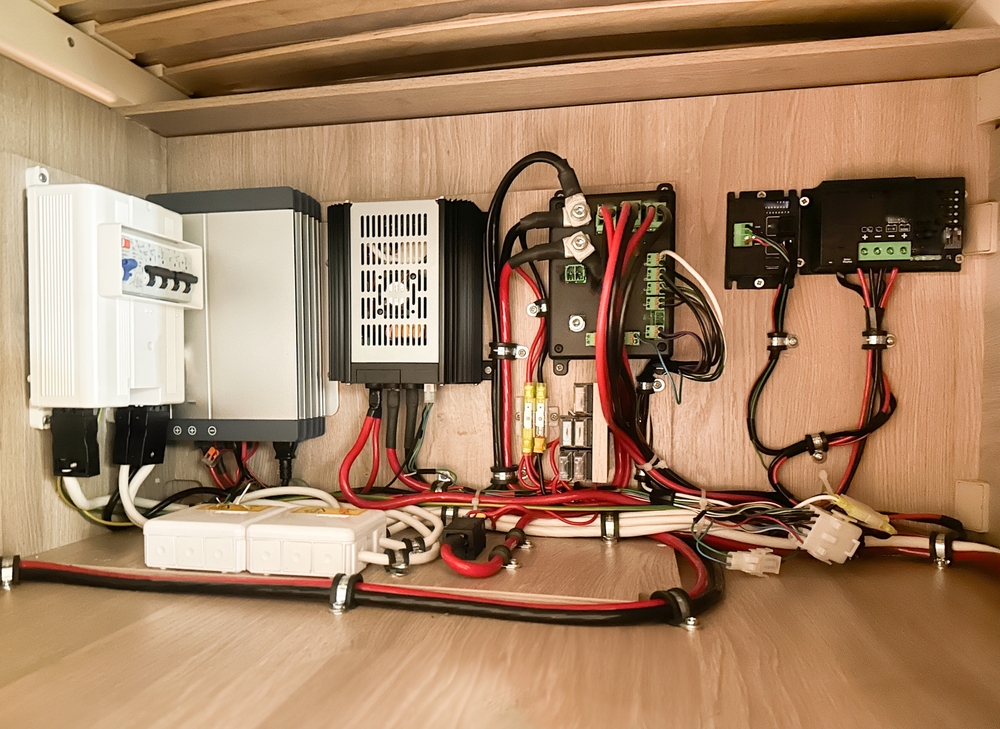
You have finally finished your van conversion or boat refit, the solar panels are soaking up the British sun, and your new fridge is tucked neatly into the cabinetry. But after a few hours, you notice the compressor seems to be cycling constantly, or perhaps the fridge is not cooling properly despite the battery monitor showing plenty of charge. In many cases, the culprit is not the appliance itself but the invisible journey the electricity takes to get there. The distance between your leisure battery and your fridge is one of the most critical factors in off grid reliability, yet it is often the most overlooked part of the installation process. It is vital to consult a 12V appliance buying guide to understand these technical requirements before you begin.
The Practical Reality of Voltage Drop 12V

Electricity travelling through a wire is a bit like water moving through a pipe. The longer the pipe and the narrower it is, the more pressure you lose by the time it reaches the tap. In an electrical system, this pressure is voltage. While a 240V mains system in a house can handle long runs without much trouble, a 12V system is far more sensitive. Even a small loss of power can cause significant issues because you are starting with a much lower baseline. Many users wonder, do 12v appliances use less electricity in these scenarios? While they are efficient, they require very stable voltage to maintain that efficiency.
When you use an inadequate 12V fridge cable length, you experience what is known as voltage drop. This means the 12.8V leaving your battery might only be 11.5V by the time it reaches the fridge terminals. Most modern compressors, such as those found in LEC units or high-quality Haden models, have built in protection that shuts the unit down if the voltage gets too low. If your cable is too long or too thin, the fridge might think the battery is flat and stop running, even when your battery is actually healthy.
Why Correct Wire Gauge 12V Fridge Matters
To combat power loss 12V system problems, you have to look at the thickness of the copper inside the insulation. If you are extending the distance of your run, you must increase the thickness, or gauge, of the wire. A standard thin automotive wire might be fine for a short half metre hop, but for 12V appliances for narrowboats and canal boats where the batteries are at the stern and the galley is midships, that same wire will fail. Knowing how to install a 12V fridge in your campervan correctly starts with selecting the right cable gauge for the distance.
Using the correct wire gauge ensures that the compressor gets the ‘kick’ of energy it needs to start up. Startup is the moment of highest demand for any fridge. If the cable cannot deliver that initial surge due to its length and resistance, the fridge may stutter or fail to start entirely, leading to spoiled food and unnecessary frustration during your trip. You should also consider which 12V fridge features are actually worth paying for, such as low-voltage protection, which helps mitigate risks from poor wiring.
Will a Long Cable Cause Battery Drain 12V Appliances?
A common worry for those new to off grid living is whether a long cable will actively suck the life out of their batteries. While the cable itself does not ‘consume’ much power, the inefficiency it creates certainly does. When a fridge receives lower voltage, the compressor has to work harder and run for longer periods to maintain the set temperature. This increased run time is what leads to excessive battery drain. It is equally important to identify the hidden power draws that drain your campervan battery, as poor wiring adds to the overall load.
If you are trying to figure out how much battery power you need to run a 12V fridge, you must factor in these efficiencies. A well wired system with minimal voltage drop will always be more economical than one where the cable is struggling to deliver the current. This is particularly important for No Frills 12V Appliances that rely on simple, efficient operation to keep costs and power draws low.
Simple 12V Cable Sizing Guide for Leisure Use
While every setup is unique, there are some general rules we have picked up over 30 years in the industry. For a standard 12V fridge, a cable run of up to 2 metres can usually get away with 4mm cross sectional area wire. However, if your run is between 2 and 6 metres, we almost always recommend stepping up to at least 6mm or even 10mm wire to be safe. It is always better to have a cable that is slightly too thick than one that is too thin, especially considering what happens to your 12V appliances during a UK winter when battery performance naturally dips.
When you are planning your campervan 12V fridge installation, try to keep the fridge as close to the fuse board and battery bank as possible. If the layout of your motorhome forces a long run, do not take shortcuts with the wiring. High quality multi strand copper cable is a small investment that prevents the headache of a warm fridge in the middle of summer. For those wanting a dual-purpose unit, researching if 12V fridge freezer combos are worth it can help you plan the appropriate power supply for a larger appliance.
Impact on Different Types of Units
The effect of cable length can vary depending on what you are running. A dedicated 12V Larder Fridge might be more forgiving than large 12V Fridge Freezers, which have higher peak power demands when the freezer side kicks in. Similarly, if you have opted for a high performance brand like Swan or Montpellier, you want to ensure the supply is clean so you get the full benefit of their energy efficient designs. You can find more specific advice on how to run 12V appliances on solar power to ensure your wiring matches your generation capacity.
Even when looking at 12V Freezers, which need to maintain much lower temperatures, the stability of the voltage is paramount. A drop in power can cause the internal temperature to fluctuate, which is exactly what you want to avoid when storing frozen goods for a long trip. This is one reason why we stress that a good low voltage cut out is only helpful if your wiring is up to the task of keeping the voltage stable. We also offer a range of low voltage fridges designed specifically to handle the rigours of mobile use.
Troubleshooting an Existing Setup

If you suspect your wiring is the problem, there is a simple way to check. Use a multimeter to measure the voltage at the battery, and then measure it at the back of the fridge while the compressor is trying to start. If the difference is more than 0.5V, your cable is either too long, too thin, or has a poor connection somewhere along the line. This is a very common issue in older caravans or when people are running 12V appliances on solar power and expecting the sun to make up for poor wiring.
For those looking for value, we often supply brands like IceKing or CDA as graded units. Many people ask what are graded appliances and are they worth buying, worried they might be less reliable. In reality, a graded fridge from a reputable brand will perform perfectly for years, provided the off grid fridge wiring in your vehicle is providing the steady 12V supply it needs.
If you are unsure about the specific requirements for your van, boat, or off grid cabin, you can always contact our team for advice. We have spent decades seeing every possible wiring mistake, and we are happy to help you get it right the first time. Before you commit to a purchase, it is also worth checking our range of Motorhome Fridges and Caravan Fridges to ensure you are choosing the right unit for your specific power setup and space.
Remember, your fridge is only as good as the wires feeding it. By choosing the right cable thickness for your required length, you ensure quieter nights, colder drinks, and a much longer life for your leisure batteries. It is the one part of your build where going ‘overboard’ on quality pays off every single day you are on the road.